
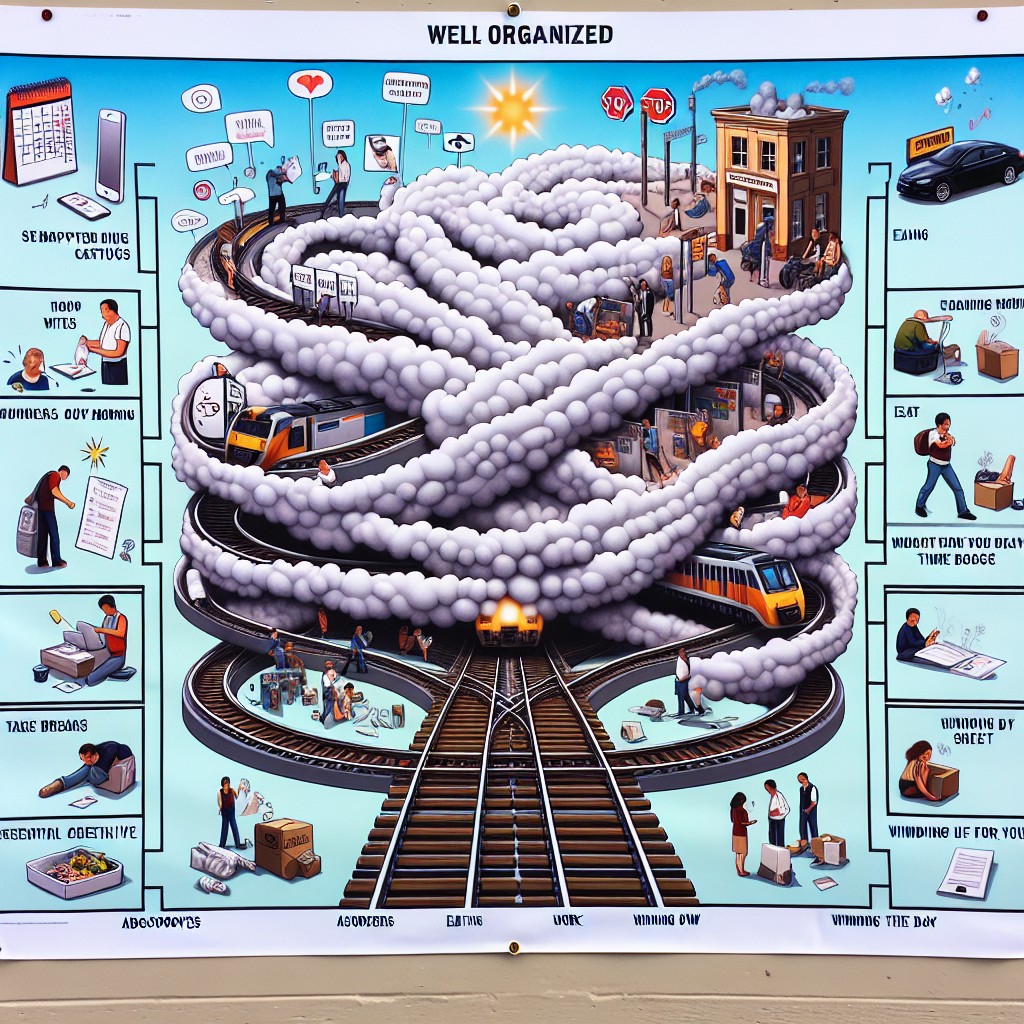
Decision Fasting: One day a week with everything pre-decided to refill willpower
Less dithering, more doing — and your future self will thank you.
The familiar spiral
You wake up already behind. Do you check email or go for a run? What’s for brekkie? Which shirt? Do you drive or catch the train? By 10am you’ve made 50 tiny calls and your brain feels like it’s wading through wet cement. The afternoon disappears into “What next?” and you end the day wondering where your focus went.
Sound familiar? You’re not lazy — you’re decision-fatigued. The fix isn’t hustling harder. It’s making fewer decisions on purpose.
Enter: Decision Fasting
Decision Fasting is one day a week where everything is pre-decided: what you’ll wear, eat, work on, and when you’ll switch off. Think of it as a reset for your willpower — a day on rails that refills your tank for the rest of the week.
It’s not about rigidity for rigidity’s sake. It’s about removing low-value choices so your brain stays fresh for what matters.
Why it works (without the waffle)
- Fewer choices, more energy: Each micro-decision carries a hidden cost. Reduce them, reclaim attention.
- Friction beats motivation: Defaults and routines quietly outperform willpower.
- Momentum compounds: One clear action triggers the next — the day feels “lighter”.
Research on “ego depletion” is mixed, but the everyday experience is consistent: when you simplify choices, you get more done with less stress.
Set up your first Decision-Fast Day in 30 minutes
- Pick your day: Choose a low-meeting day (e.g., Tuesday). Block it out in your calendar with a friendly title like “DF: On Rails”.
- Choose your domains: Pre-decide these basics:
- Wake, move, and wind-down times
- Outfit and meals
- Top 1–2 work priorities
- Communication windows (when you’ll check email/Slack)
- Breaks, lunch, and finish time
- Write a simple script: One page you can glance at. Keep it boring on purpose (boring is fast).
- Prep the night before: Lay out clothes, pack lunch, stage your workspace, queue your first task.
- Set guardrails: Create a 3-sentence rule for emergencies (see below) so you can flex without derailing.
A template you can copy
Here’s a clean, repeatable outline:
- 06:30 Wake, water, 15-min walk, 5-min stretch
- 07:15 Same brekkie every week (e.g., oats + fruit). Outfit laid out.
- 08:00 Deep work block #1 (90 mins) — no email/phone
- 09:45 Break (10 mins) — stand outside, breathe
- 10:00 Deep work block #2 (60 mins)
- 11:00 Admin window (30 mins) — email/Slack batch
- 11:30 Focus sprint (45 mins) — finish a “stuck” task
- 12:15 Lunch (prepped) + short walk
- 13:00 Meetings (if unavoidable) or learning time (course/book)
- 14:30 Light tasks (60 mins) — invoices, notes, scheduling
- 15:30 Shutdown routine (30 mins) — plan tomorrow, clear desk
- 16:00 Off. Phone on Do Not Disturb until 18:00
- Evening: Pre-decided dinner, 20-min tidy, read, early night
Real Aussies, real tweaks
- Sophie, product manager in Sydney: Moved her Decision-Fast Day to Wednesday (fewest meetings). She wears the same black tee/jeans, has a “default lunch”, and only checks Slack at 11am and 2:30pm. Reports “the calmest day of my week”.
- Arun, small biz owner in Brisbane: Tuesday DF Day = no sales calls, just fulfillment and finances. He pre-loads invoices on Monday night and finishes by 4pm for a surf. Revenue went up because the back-end finally ran smoothly.
- Mia, nurse in Perth (shift worker): Uses a DF “kit”: pre-packed bag, set snack plan, fixed pre-shift warm-up playlist. Decision-Fast principles still apply even when shifts move.
Guardrails that keep it humane
- Emergency override: “If something truly urgent appears, I’ll handle it, then return to the next scheduled block.”
- 90% rule: Aim for 90% adherence. The win is fewer choices, not perfection.
- Focus swaps, not cancellations: If a block slips, swap it with the next light task. Keep the train moving.
- One creative wildcard: Reserve 30 mins for an inspired tangent. If nothing pops, use it to read.
Make it stick (without turning into a robot)
- Same start cue: One song, one tea, one 2-minute tidy. Condition your brain that “this means go”.
- Pre-decide defaults you enjoy: A DF Day shouldn’t feel like punishment. Pick meals/work you actually like.
- Reflect for 5 minutes: What flowed? What dragged? What will you pre-decide differently next week?
- Protect it socially: Tell your team/household your DF hours. Auto-reply: “Heads down today — I’ll reply at 11 or 2:30.”
Quick checklist (print this)
- Chosen day blocked in calendar
- One-page script written
- Clothes, meals, first task prepped
- Comms windows set
- Emergency rule agreed
- 5-min review booked at day’s end
Track it with whatever works — paper or digital
A notebook and a pen can take you far. If you prefer a simple, effective digital option to plan and track your goals, Meloplan makes it easy to map your Decision-Fast template, tick it off, and review what worked — no fuss or fluff.
Set up your outline once, copy it each week, and watch the calm compound.
Give Meloplan a try and see how light a well-designed day can feel.

Leave a Reply