
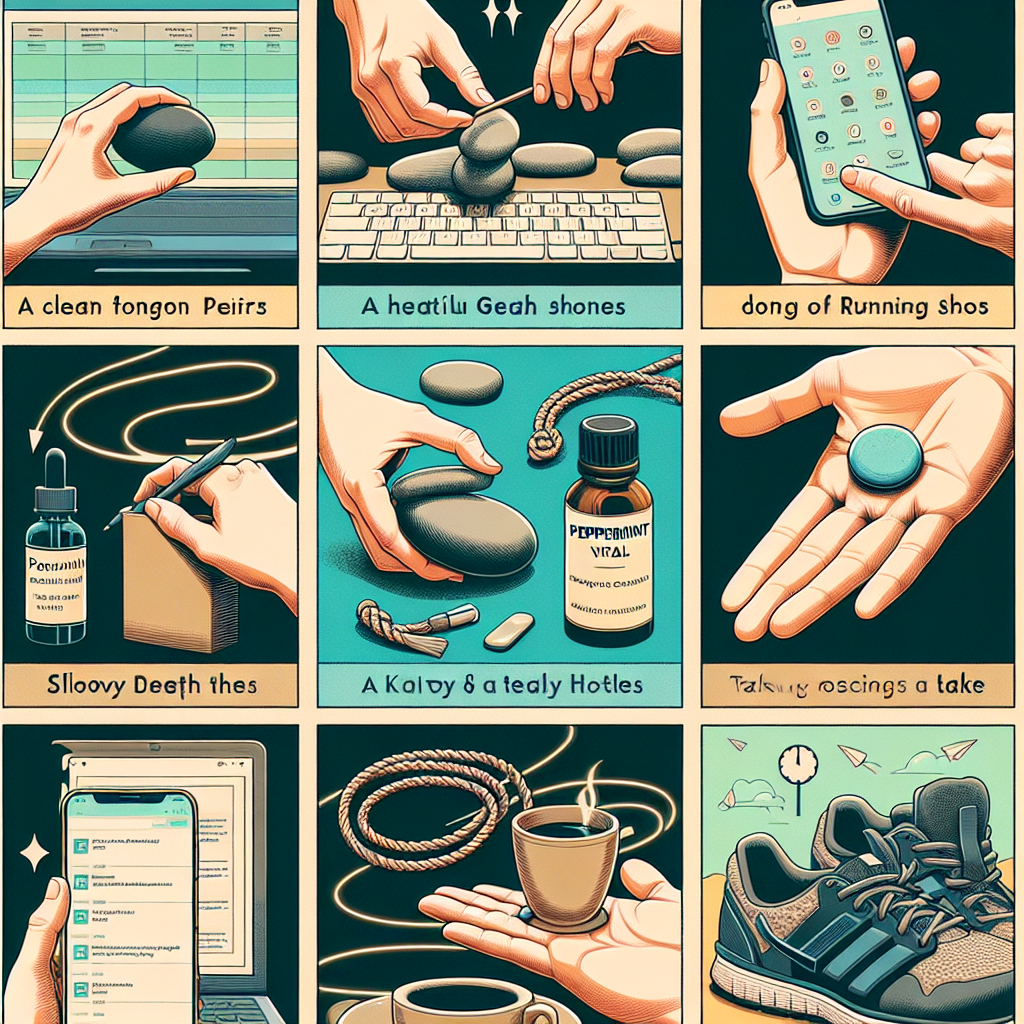
Embodied Goals: Make Your Aims Something You Can Feel
You start Monday with a neat list and big intentions. By Wednesday arvo, the list is buried under emails, you’ve half-started three things, and that important goal feels fuzzy. It’s not a motivation problem—it’s a recall problem. The brain prioritises what it can sense, not just what it can think.
Why “embodied” goals work
When you pair a goal with a physical cue—texture, scent, or a simple movement—you give your brain a shortcut. Instead of digging through mental clutter to remember “go for a run” or “prep the budget,” a specific sensation pulls that intention to the surface in seconds. This is embodied cognition in practice: linking thought to the body to make recall faster and action easier.
The 10‑minute Embodied Goal Method
-
Pick 1–3 priority goals for this week.
Make each one specific and time-bound: “Run 3x for 20 minutes,” “Draft the proposal by Thursday,” “Cook at home 4 nights.”
-
Choose a primary sensory anchor for each goal.
- Texture: smooth stone, braided band, ceramic mug, sandpaper patch.
- Scent: peppermint oil, eucalyptus rub, favourite tea.
- Movement: two-shoulder roll, lace tug, thumb-to-fingertip press.
Pick something you can access exactly when the goal matters.
-
Create a 6‑word cue phrase.
Examples: “Lace, breathe, path, easy first kilometre.” “Peppermint, page open, type ten lines.” Keep it short and rhythmic.
-
Rehearse the link—now.
Hold/smell/do the movement for 5 seconds while saying your phrase. Visualise taking the first step of the task. Repeat 3 times. Do another 3 reps tonight to strengthen the association.
-
Plant the anchor in your environment.
Place it where the behaviour starts: the stone on your keyboard, the oil by your running shoes, the elastic band on your water bottle.
-
Track, then tweak.
After each day, note whether the anchor sparked the action. If recall is weak, amplify the sensation (stronger scent, more distinctive texture) or simplify the phrase.
Real‑life examples you can borrow
- The time‑poor runner: A quick lace tug + two deep breaths at the door anchors “Run, easy start, enjoy the route.” The same tug before leaving work primes the habit on the commute home.
- Saving for a house deposit: A smooth coin in the pocket becomes the “no‑spend lunch” texture. When paying, the coin reminds you to use what’s in the fridge instead.
- Deep‑work writing: A peppermint scent + the feel of a heavy ceramic mug says “Open doc, write ten ugly lines.” The combo signals start without negotiation.
- Confident presentations: Before speaking, a thumb‑to‑fingertip press with a quiet “Slow, smile, first sentence” grounds nerves and recalls your opening beat.
Make it stick with tiny prompts
- Pair anchors with existing habits (put the scent by your kettle, the band on your watch).
- Keep anchors portable for on‑the‑go goals (a keyring bead for reading on the train).
- Use your phone’s haptics as a “movement” cue—set a custom vibration you only use for that goal.
- Refresh weekly: swap in a new texture or scent if one fades into the background.
Troubleshooting
- No scent environment? Choose texture or movement—both are discreet and reliable.
- Public setting? Use subtle anchors (ring twist, fingertip press) and an internal phrase.
- Anchor fatigue? Rotate monthly. Novelty keeps recall sharp.
- Missed a day? Do a 30‑second re‑link at bedtime: anchor + phrase + visualise tomorrow’s first step.
Quick‑start worksheet
Copy this template into your notes:
- Goal (specific + when):
- Primary anchor (texture/scent/movement):
- 6‑word phrase:
- Where I’ll place the anchor:
- First rehearsal time (today + tonight):
- Daily check: Did the anchor spark action? (Y/N + tweak)
Plan and track without fuss
If you like keeping your goals tidy in one place, you can pair this method with a simple planner. In Meloplan, I add my anchor right into the task title—like “Draft intro (peppermint + mug)”—then tick it off after each session. You can set quick reminders for your 30‑second re‑link at night, tag anchors by sense (🪨 🌿 🏃), and see which cues actually move the needle over the week. No bells and whistles—just a clean way to capture the plan and notice what works.
Curious? Give it a try here: Meloplan free sign‑up. Set one goal, add one anchor, and see how much lighter starting feels.

Leave a Reply